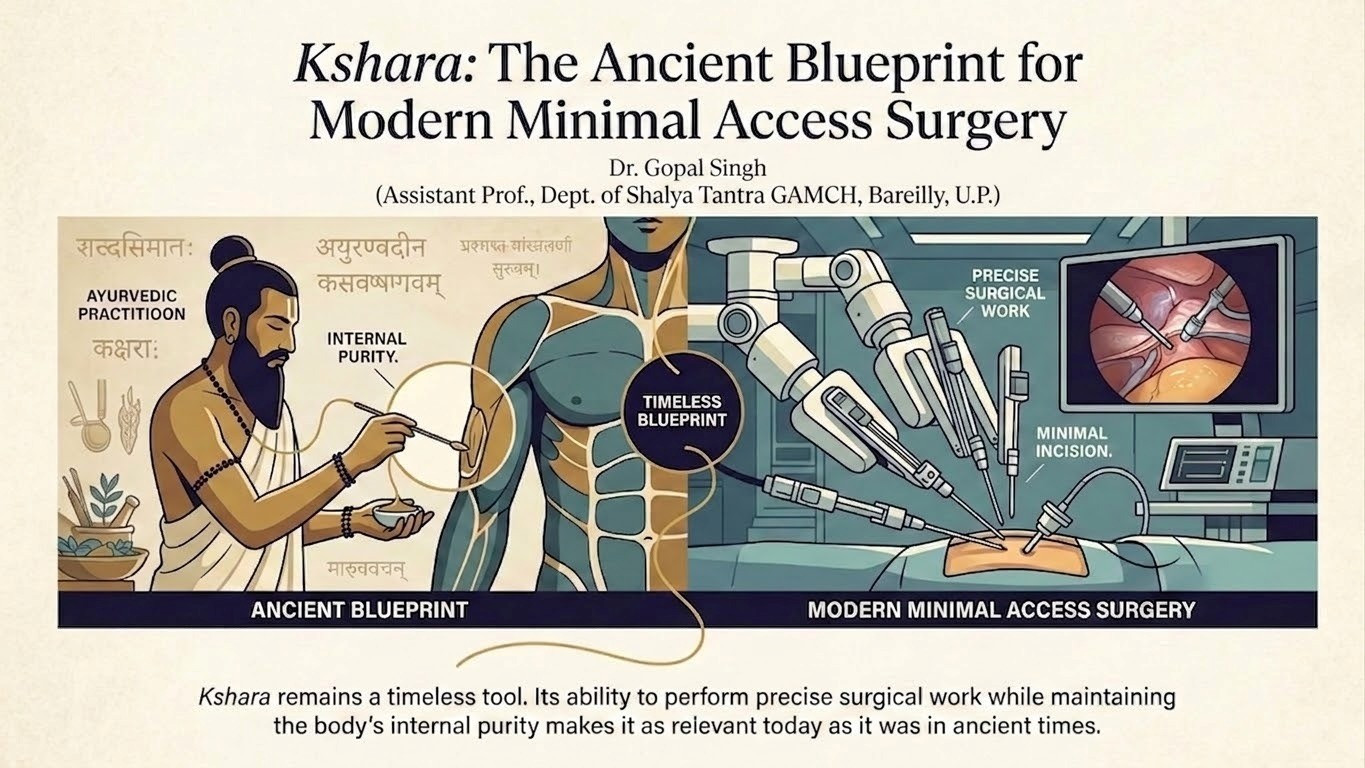
Aim - A short course that emphasizes the literature review and, most importantly, the method of preparation of Kshara and Kshara Sutra along with their method of application in various anorectal disorders.
Course highlights -
- A complete literary review from its etymological to its practical application and importance in present era.
- Students will learn standardized clinical protocol for the application of Pratisaraniya Kshara in managing Arsha (hemorrhoids) and step-by-step procedural guidelines (Poorva, Pradhana, and Paschaat Karma) for the primary threading and thread-changing (Rail-road method) of Kshara Sutra in fistula-in-ano.
- Will get a precise quality control protocol for Kshara and kshara Sutra manufacturing.
In today's era, Kshara Sutra is important because it proves that "old" does not mean "outdated." It bridges the gap between ancient surgical intuition and modern evidence-based proctology, offering a safe, reliable, and affordable cure where modern knives often falter, proving ancient Ayurvedic interventions into highly respected, scientifically validated techniques for minimal access surgery.
- Teacher: Ayurveda Pandit
- Teacher: Dr. Gopal Singh
📘 Welcome to the Free Short Course
Course Title: Learning Sanskrit‑based Ayurvedic Samhitas using IT & AI Tools
Namaste and welcome! I am delighted to have you here.
This course is born from a simple but important observation: many young Ayurvedic scholars find it challenging to understand the original Sanskrit Samhitas and often rely on translations that may be incomplete or inaccurate. At the same time, the Government of India and various research institutions have already created a wealth of freely available digital resources such as e‑Samhitas, Sanskrit dictionaries, sandhi engines, clinical portals, and research databases. This course will show you exactly how to find and use these tools effectively.
What You Will Learn
- How to navigate official e‑Samhita portals (Caraka, Suśruta, Mādhavanidāna, and more).
- How to use online Sanskrit dictionaries and AI‑powered sandhi‑splitting tools.
- Where to find authentic clinical handbooks (AyurCeL, Ayuhandbook) and research databases (AYUSH Portal, DHARA, ARD).
- Practical ways to integrate these tools into your study, teaching, practice, or research.
How This Course Works
The course is divided into 5 main sections. Each section contains short readings, direct links to tools, video demonstrations, and hands‑on assignments. You will not just read about the resources — you will actually use them.
What You Need
- A laptop or desktop computer (smartphone works, but a larger screen is better for using multiple websites side‑by‑side).
- A stable internet connection.
- Curiosity and a willingness to explore digital tools — no prior technical skills are required.
A Note Before You Start
All the tools covered in this course are completely free and developed by government bodies (Ministry of AYUSH, CCRAS, NIIMH) or non‑profit academic institutions. You do not need to pay for any subscription.
If you ever get stuck, use the course forums to ask questions. I will be actively participating, and I encourage peer‑to‑peer help as well.
Let’s begin your journey toward confident, authentic, and digitally‑empowered learning of Ayurveda Samhitas.
- Teacher: Ayurveda Pandit
- Teacher: Dr. Ravi Sharma

Short free course on Nadi Pariksha
- Teacher: Dr. Dipti Gamare
- Teacher: Ayurveda Pandit
Short free course of the basics of panchakarma for life style disordes.
- Teacher: Ayurveda Pandit
- Teacher: Dr. Pankaj Singh

Short Free Course for BAMS aspirants and stakeholders
Relevance of the topic
1. Re-establishes the importance of authentic ayurvedic diagnosis
True diagnosis (Yathārtha Nidāna) is the foundation of effective and safe treatment.
2. Emphasizes rational and individualized treatment planning
Every patient is unique. Treatment should be based on Prakriti, Dosha, Agni, Avastha, Bala and many more factors.
3. Highlights that therapeutic success depends on multiple interconnected factors
Physician, Patient, Disease, Drug, Diet, Lifestyle, Environment, Mind-set and more—together determine the outcome.
4. Prevents reduction of Ayurveda into mere pharmacognosy or product marketing
Ayurveda is not just about herbs or products; it is a complete system of health and healing.
5. Reinforces Ayurveda as holistic clinical science rather than only a drug-based system
It addresses the root causes, balances the individual as a whole and promotes lasting wellness.
6. Encourages evidence-based yet classical practice
Bridging timeless wisdom of the Samhitas with modern research for credible and impactful Ayurveda.
Ayurveda
A Science of Life, Not Just of Drugs
Main Idea
Ayurveda is a holistic science.
Its true strength lies in right understanding, right diagnosis and right treatment.
course content Short free course on the assessment of clinical efficacy of ayurvedic treatments https://drive.google.com/file/d/1F4PxfkkcWdhhL6OB7FeGwH3Hd14uEVYU/view?uslp=drivesdk
- Teacher: Dr. Ayushlal P.M.
- Teacher: Ayurveda Pandit
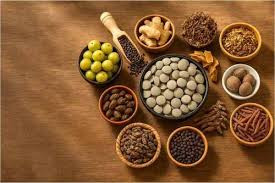
Rasashastra is a specialized branch of Ayurveda that deals with the therapeutic use of metals, minerals, gems, and herbal ingredients after undergoing specific purification and processing techniques. The medicines prepared through these processes are known as Rasaushadhis (Herbo-Mineral Drugs). These formulations are highly valued in Ayurveda due to their low therapeutic dose, rapid action, enhanced bioavailability, long shelf life, and effectiveness in chronic and difficult-to-treat diseases.
The increasing global acceptance of Ayurveda has highlighted the need for stringent quality assurance and scientific validation of Rasaushadhis. Concerns regarding heavy metal toxicity often arise when improperly processed, adulterated, or irrationally used products are consumed. However, research indicates that properly manufactured and quality-tested Rasaushadhis prepared according to classical guidelines can be used safely under the supervision of qualified Ayurvedic practitioners.
This course provides a comprehensive understanding of the classical principles and modern scientific approaches used to ensure the quality, safety, and efficacy of Ayurvedic Rasaushadhis. It enables learners to critically evaluate purification processes, quality control parameters, analytical testing methods, and safe clinical practices necessary for the rational use of herbo-mineral medicines.
- Teacher: Ayurveda Pandit
Course Type: Free & Short
Target: For Independent Ayurveda learners /BAMS aspirants
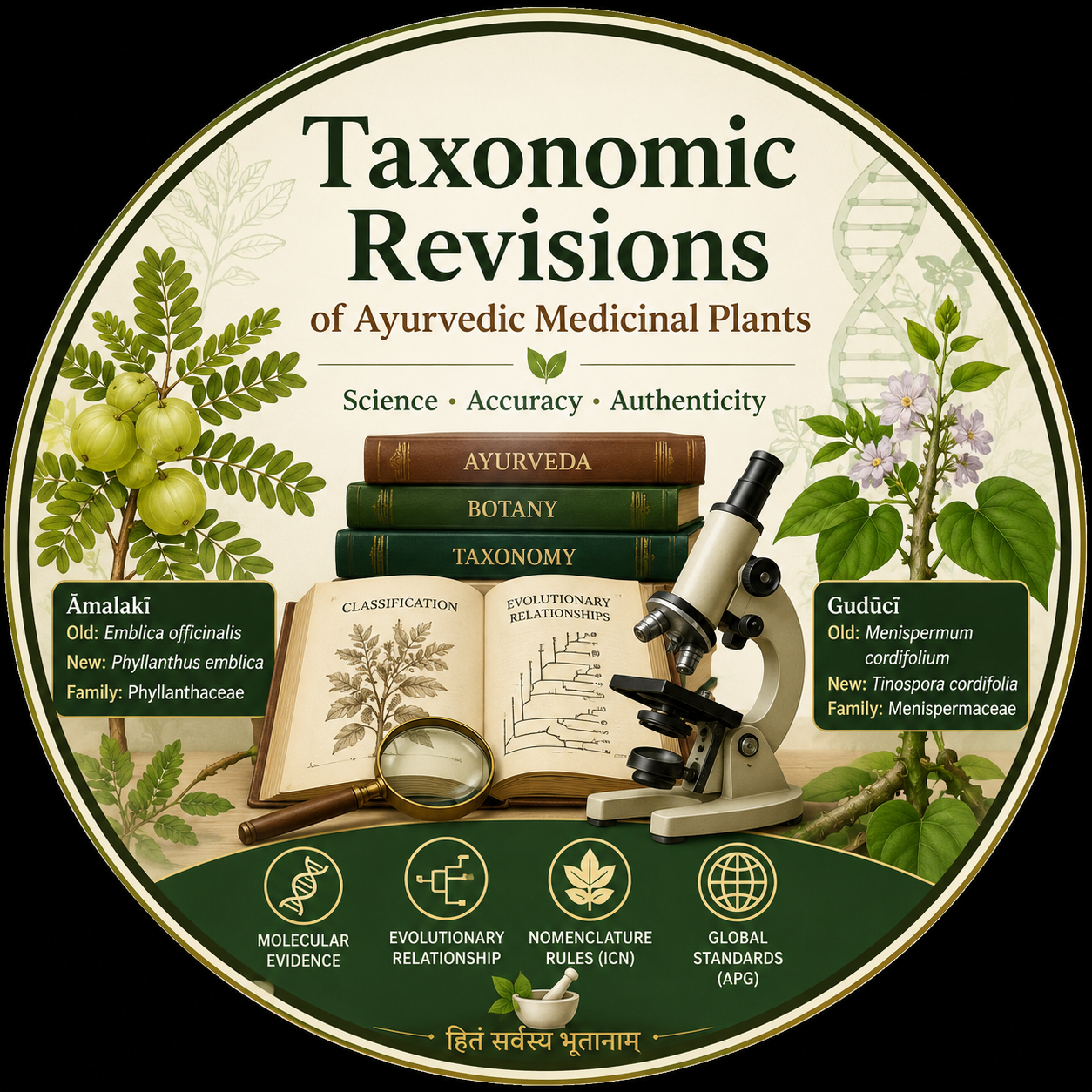
Aim: To make students aware and familiar with the taxonomic revisions of Ayurvedic medicinal plants in comprehensive and simplified manner. (Taxonomic revision is not confusion or error; it is scientific progress)
Objectives:
- Understand the scientific basis of taxonomic revisions
Learn how morphological studies, DNA evidence, nomenclatural rules, and phylogenetic principles lead to changes in scientific and family names of Ayurvedic medicinal plants. - Identify and authenticate updated medicinal plant nomenclature
Compare old and revised scientific names/family names using authentic global taxonomic databases and standard references relevant to the NCISM BAMS curriculum. - Apply updated taxonomy in Ayurveda education and research
Develop competency to use revised botanical names correctly in teaching, examinations, pharmacognosy, academic writing, research publications, and professional practice.
- Teacher: Ayurveda Pandit
- Teacher: Dr Ram Deo Pandit